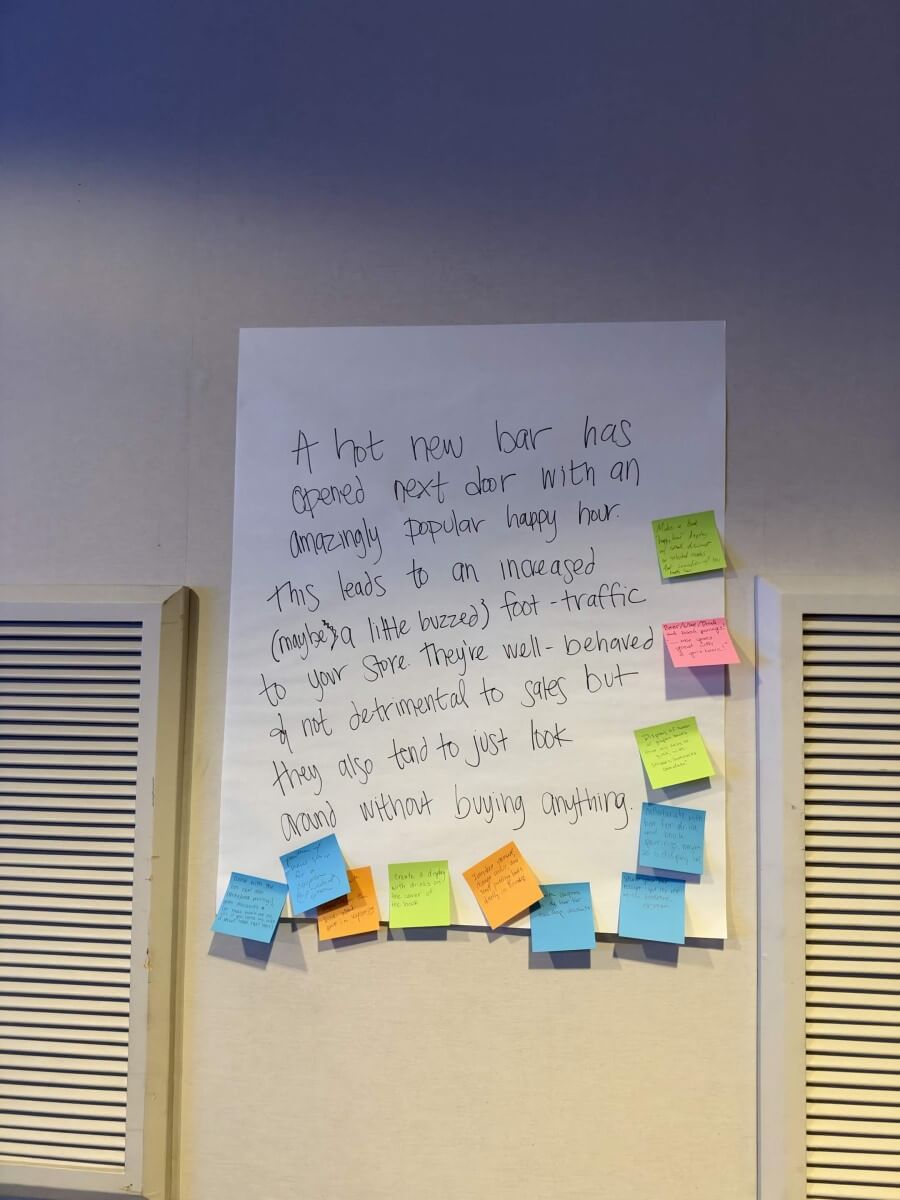
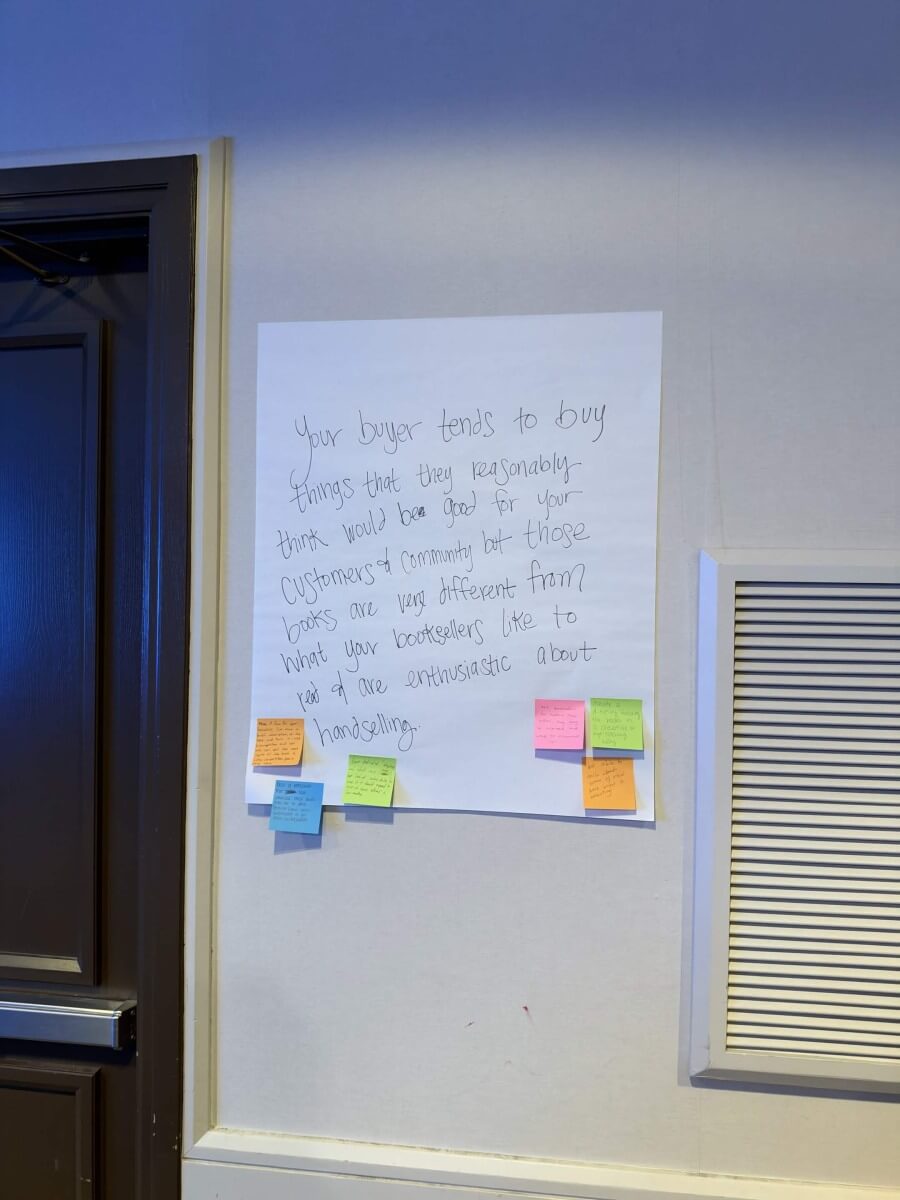
A new education session concept we offered at FallCon this year was Booksellers are the Bookstore, an interactive hour in which we had booksellers from across the region with varying levels of experience collaboratively brainstorm solutions to specific problems that could arise at their bookstores, with the goal not primarily being to have solutions to take home but rather exercise a form of problem-solving that puts booksellers and bookselling at the heart of a bookstore's creativity and success.
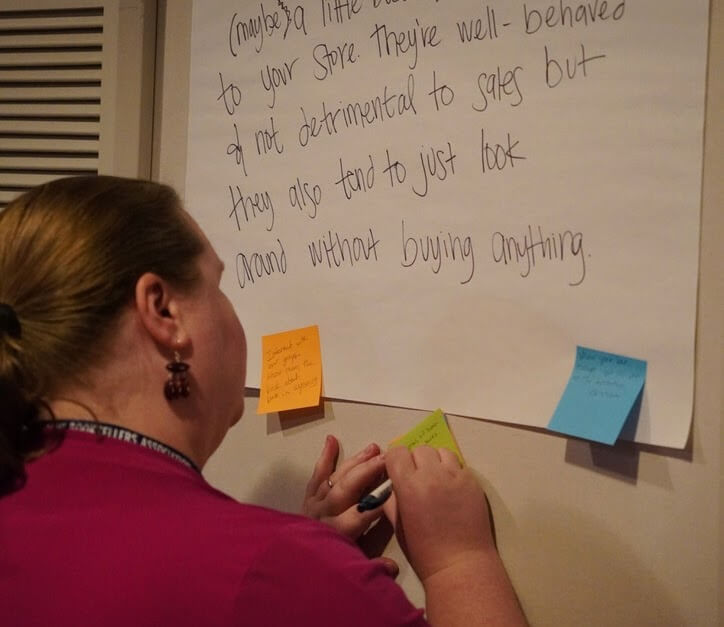
For this session, we put posters around the room, each with a specific scenario a bookstore might experience. Attendees were given sticky notes color coded to 4 different bookselling tools:
1. Handselling
What are ways your booksellers can talk to and interact with your customers?
2. Book Displays
How do you choose what books to put on display to attract attention and convert to sales?
3. Shelf Talkers
How can you make a book more attractive on a shelf?
4. Community
What are some ways to involve your customers and their circles?
The attendees were then given time to write down proposed solutions and stick them onto the respective poster. These solutions were encouraged to be as specific as possible and not concerned with typical constraints (time, budget, etc.). After everyone was able to submit as many solutions as they could, we went around the room to discuss this, leading to a productive and collaborative conversation expanding upon the ideas along with sharing of experiences booksellers have had implementing similar concepts.
We have included each of this session's scenarios (along with the proposed solutions) for your reference below. You can take this idea to your own store in ways such as putting up a similar poster up in your employee break room and encouraging staff to brainstorm their own ideas. You can then, either in a group meeting or individually, discuss these solutions with your staff and create an opportunity to collaborate and share creativity to address broad issues that all of our bookstores inevitably face at some point. We're looking forward to expanding upon this concept for future education sessions at upcoming conferences!
Example Scenarios
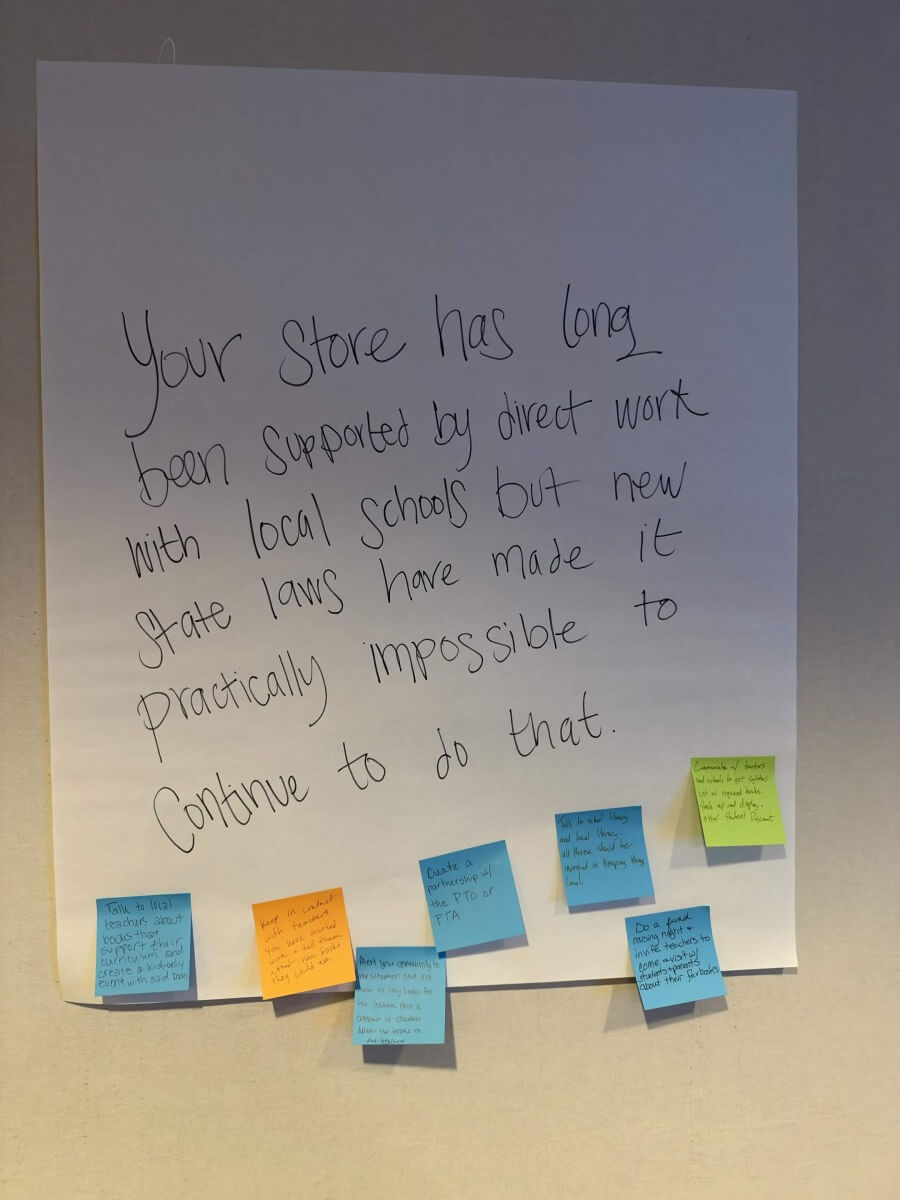
Solutions generally revolved around engaging with school-affiliated (but ultimately outside of official school business) organizations such as PTAs and teachers/librarians off the clock to create programming such as book fairs, reading lists, and family nights. Additionally, one bookseller suggested synergy with school required reading lists including displays and discounts.
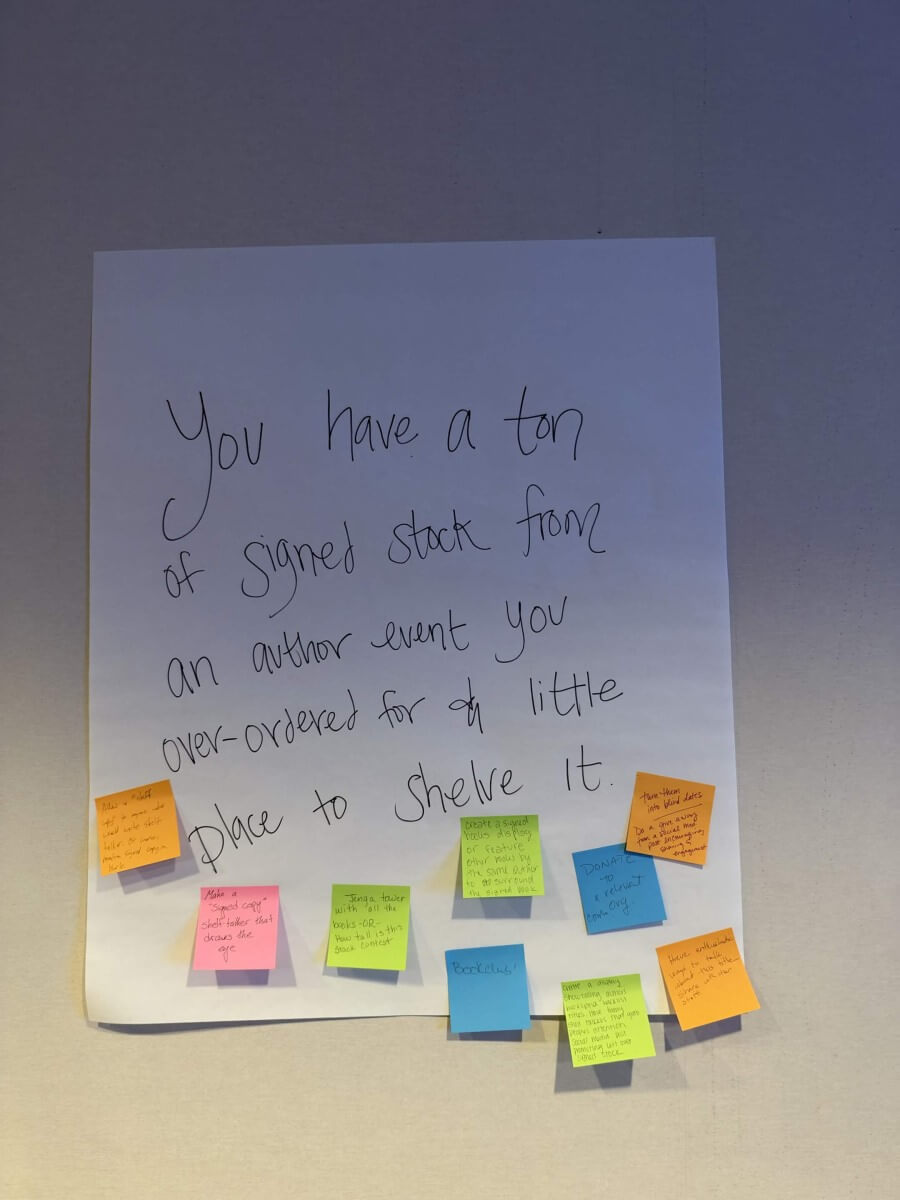
Many ideas revolved around incentivizing staff to read (and be able to handsell) these books. Other ideas involved packaging these books into concepts like Blind Date with a Book or creative displays built around the sheer quantity of books. Community-oriented ideas included hosting a book club for the book or donating to a relevant organization.
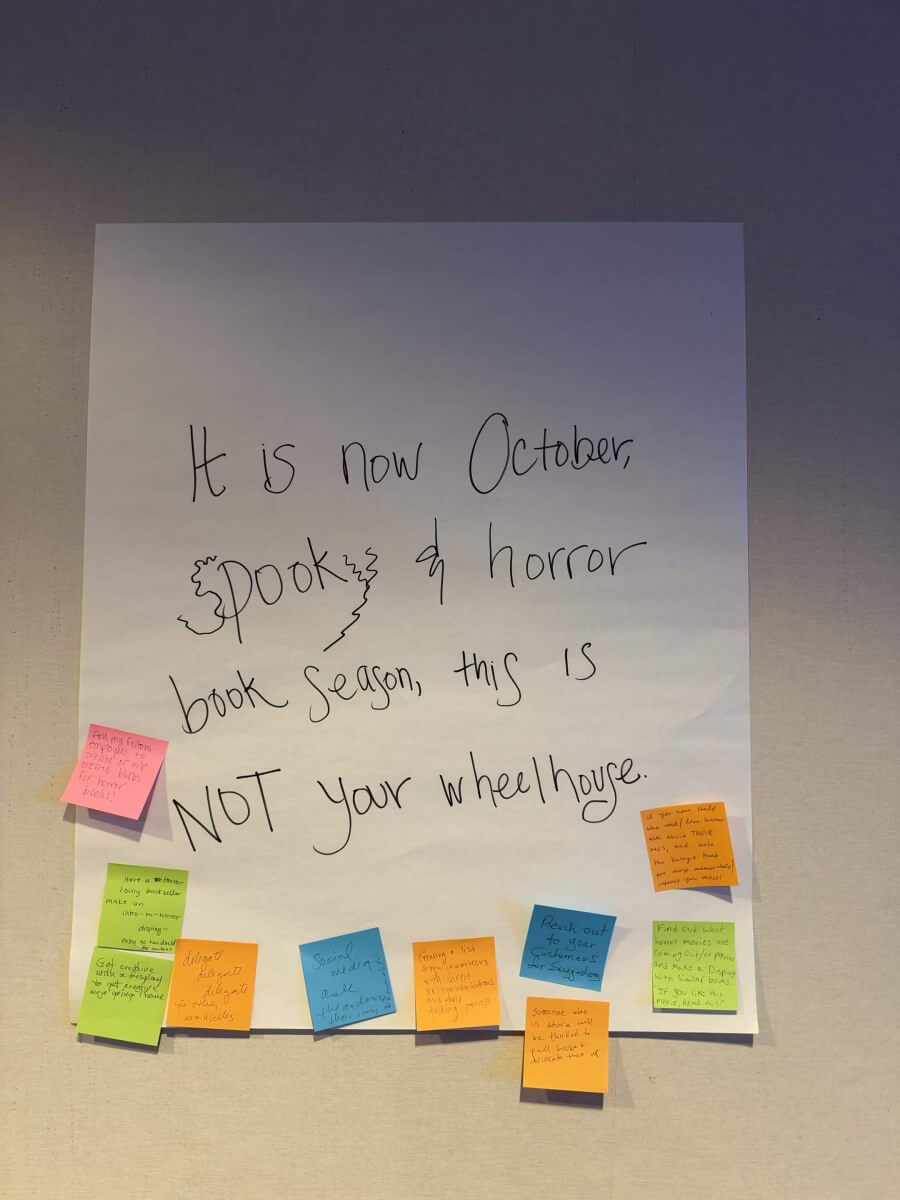
Many proposed solutions involved empowering your booksellers who do see horror as their wheelhouse through giving them freedom to create displays, social media content, and more. Additionally, you can reach out to your community and give them a voice in your store. Another suggestion was to synergize your marketing with pop culture such as whatever prominent horror movies are currently in theaters.
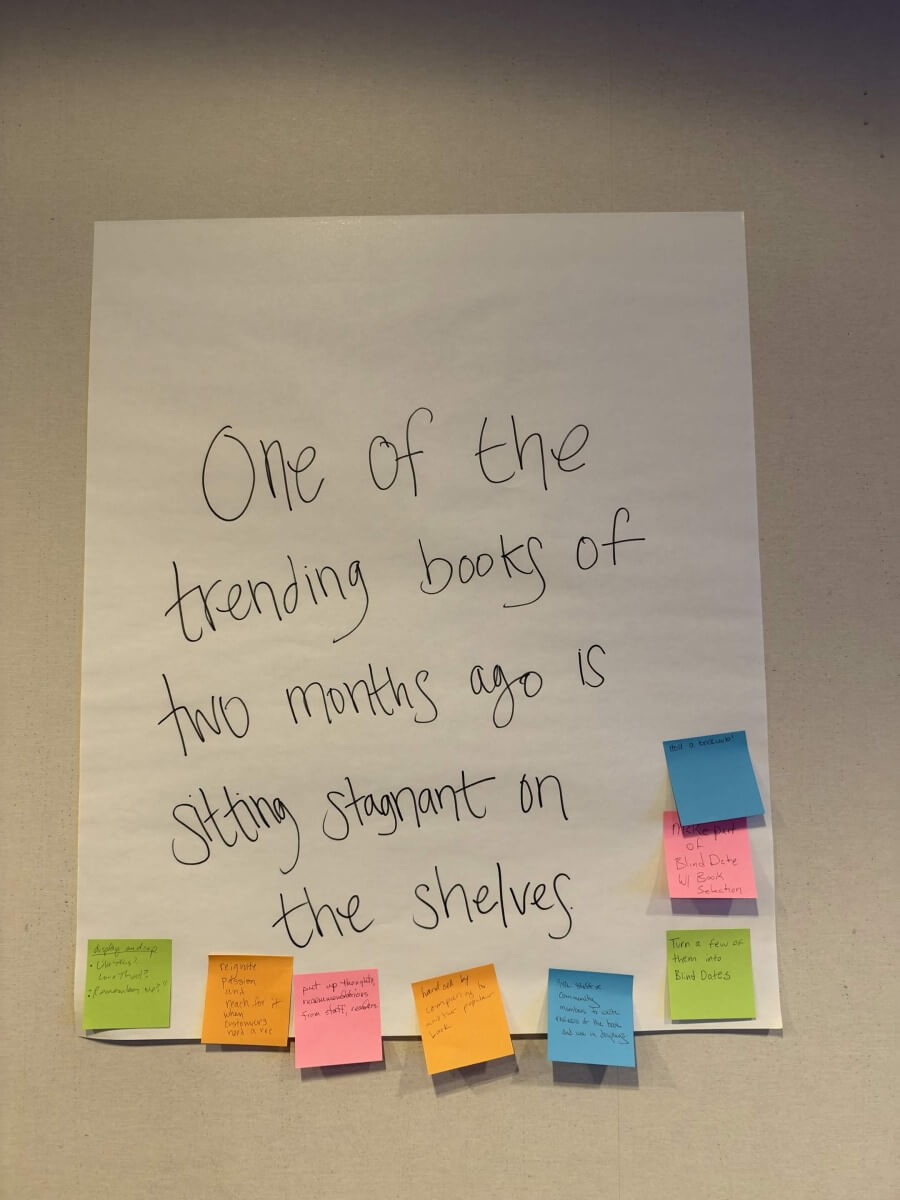
Similar to the signed book scenario from earlier, many ideas involved packaging these books into displays, Blind Date with a Book, or book clubs. Other ideas involved capitalizing off of previous interest by collecting previous bookseller/community blurbs and by comparing it to other current bestsellers.
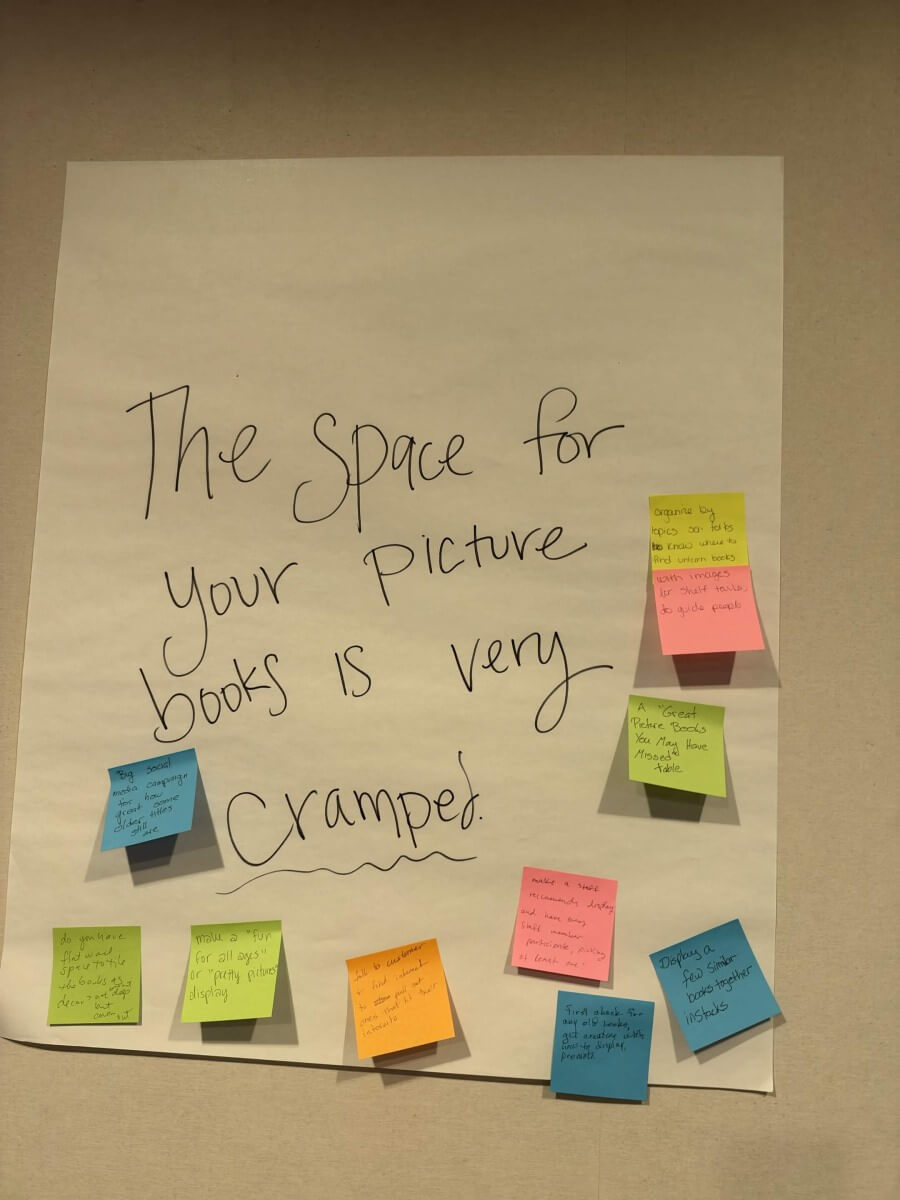
Ideas for this problem included marketing the picture books beyond the typical audience, such as creating "Fun for all ages" or "Coffee Table Books" displays. Additionally, there were suggestions to shelve your picture books in ways more conducive to sales such as organizing by topic rather than all in one large section. Another general strategy was to give your staff member time to read picture books so they are more equipped to handsell them.
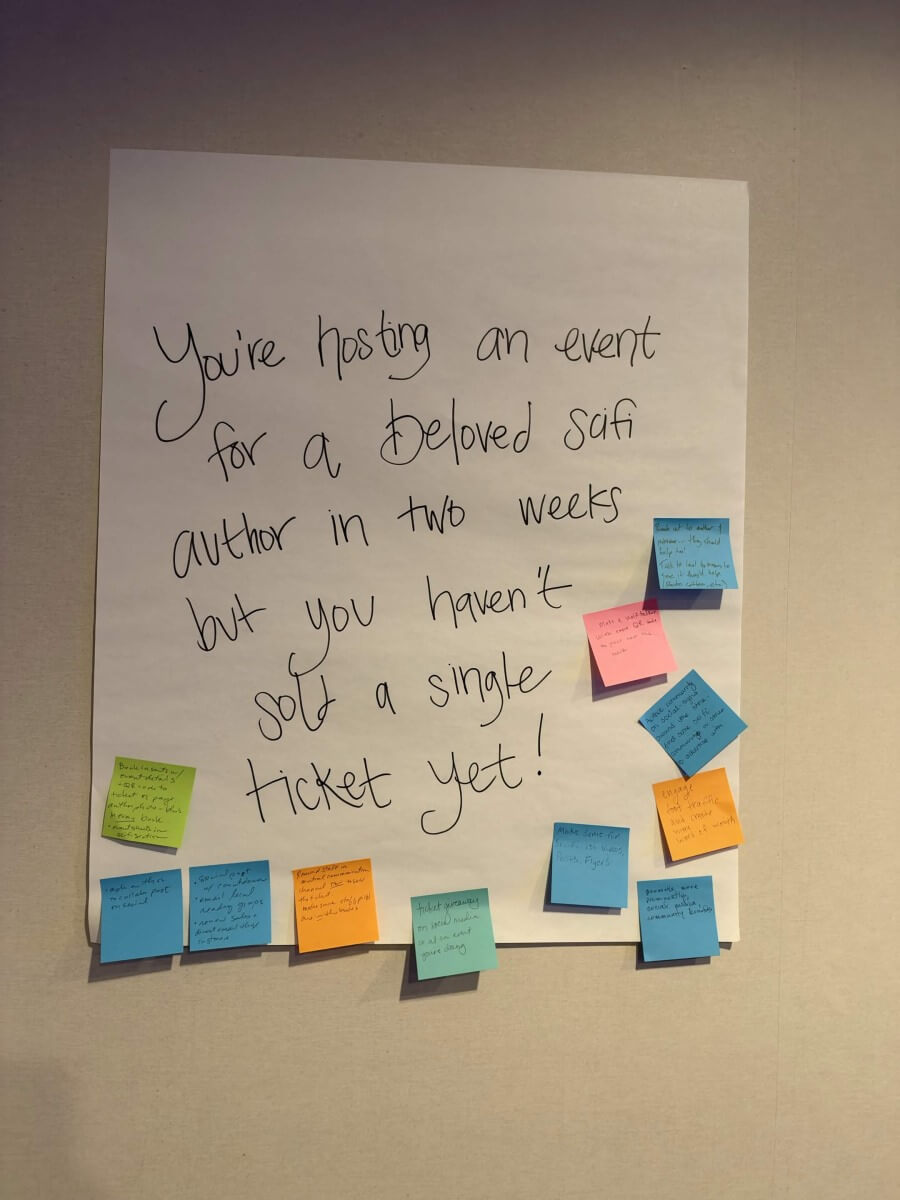
This problem inspired many community-based solutions such as reaching out to the publisher/author for strategies, assets, or access to their audiences in promotion. Another community idea was to look for local organizations, clubs, or fan groups that would engage with the event author.
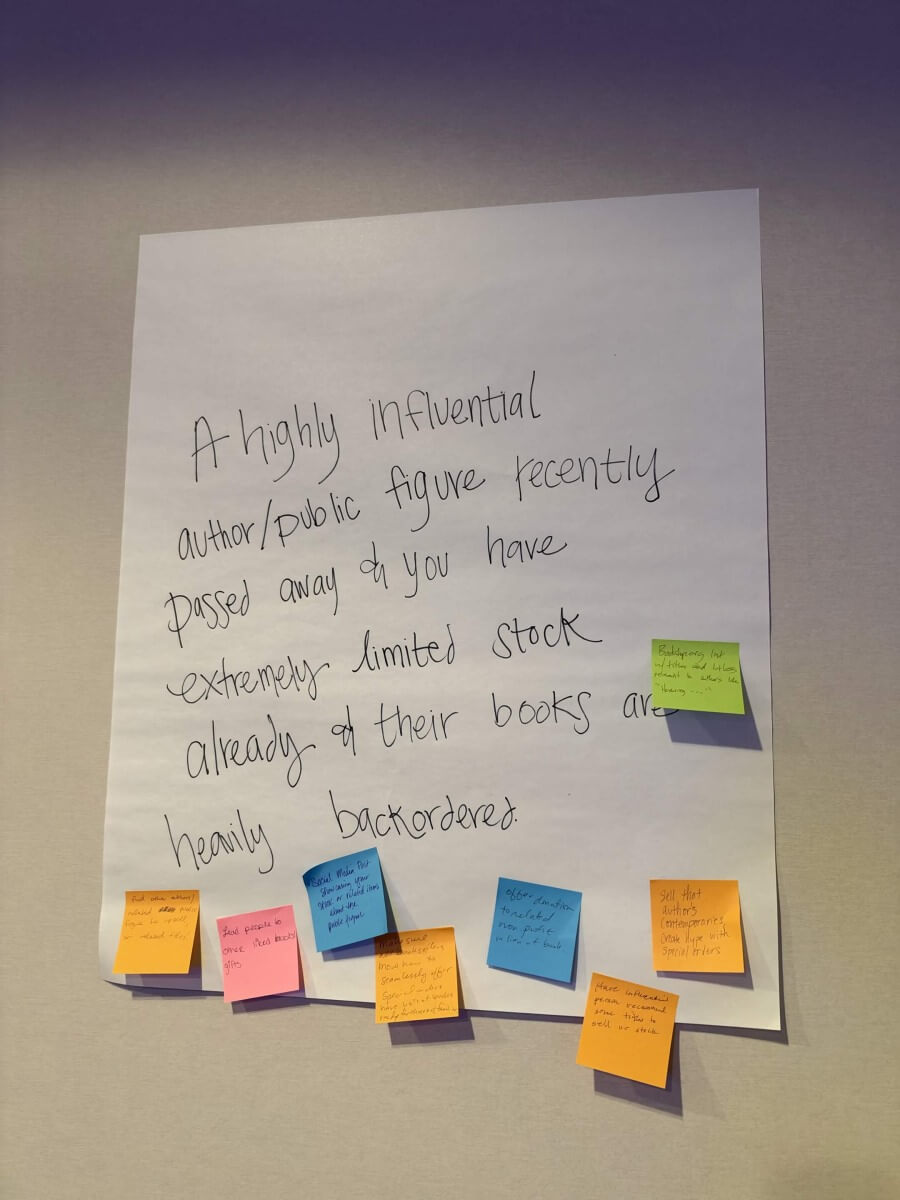
Ideas for this problem included directing sales to places that still support you such as Libro.fm and Bookshop.org, recommending books other than their own that are in their spirit or influence, and also creating content beyond the books themselves.
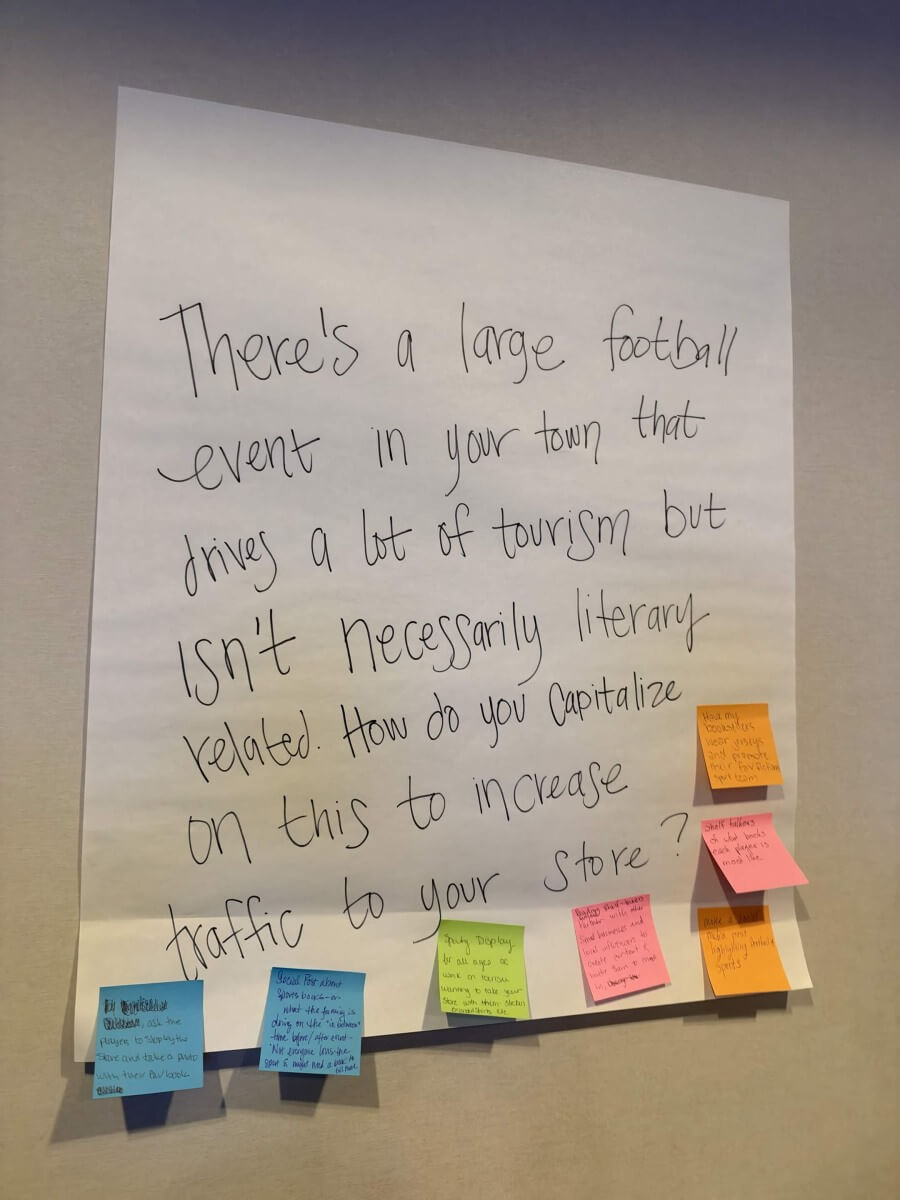
Most ideas here revolved around making your store temporarily appealing to sports fans in particular through displays, partnering with local businesses to have special offers, and encouraging staff to dress and embody sports. Additionally, it is important to promote this on social media so the right crowd sees it.
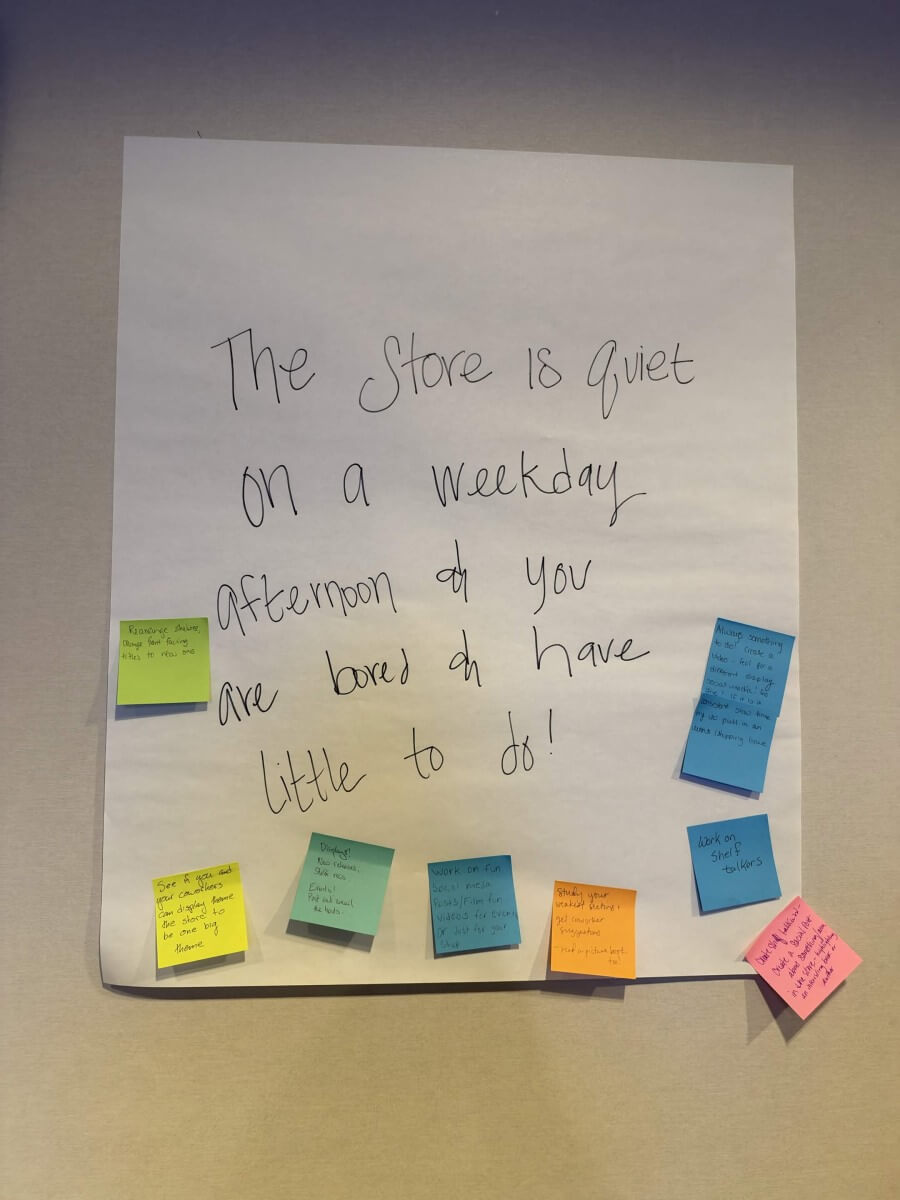
Broadly, the solution here was to open up creative tasks for your staff to do such as create social media content or get involved in higher level processes such as creating displays.
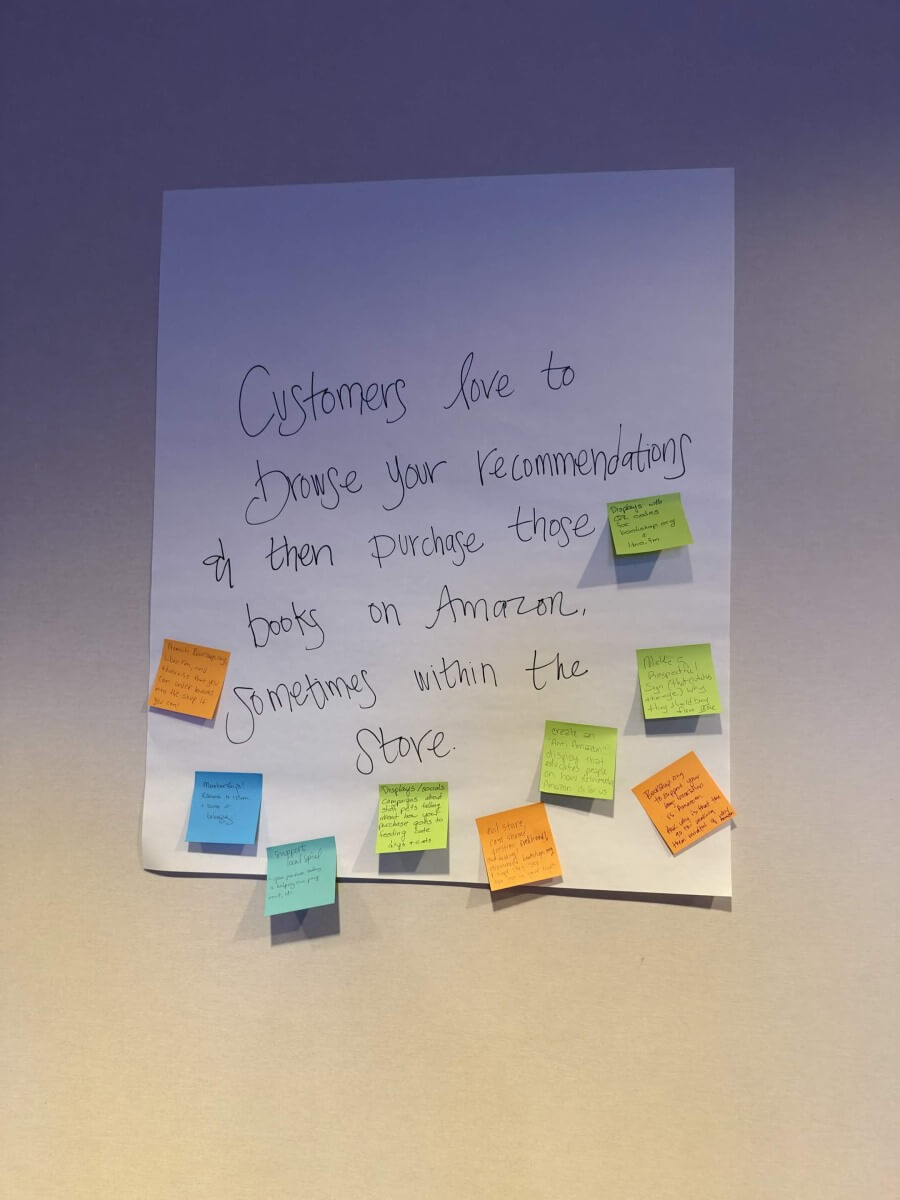
There were many different lines of thinking here. One option was to direct to services that more closely mirror Amazon's offers while still supporting your store such as Libro.fm and Bookshop.org. Another idea was to create more incentive for customers to specifically shop at your store through programs such as memberships. The most engaging idea was to embrace being honest with your customers and why it's important to shop local (and specifically avoid Amazon). There's no shame in saying the quiet part out loud and reminding your customers why they love shopping Indie (and that without their support, we wouldn't be able to keep our doors open).
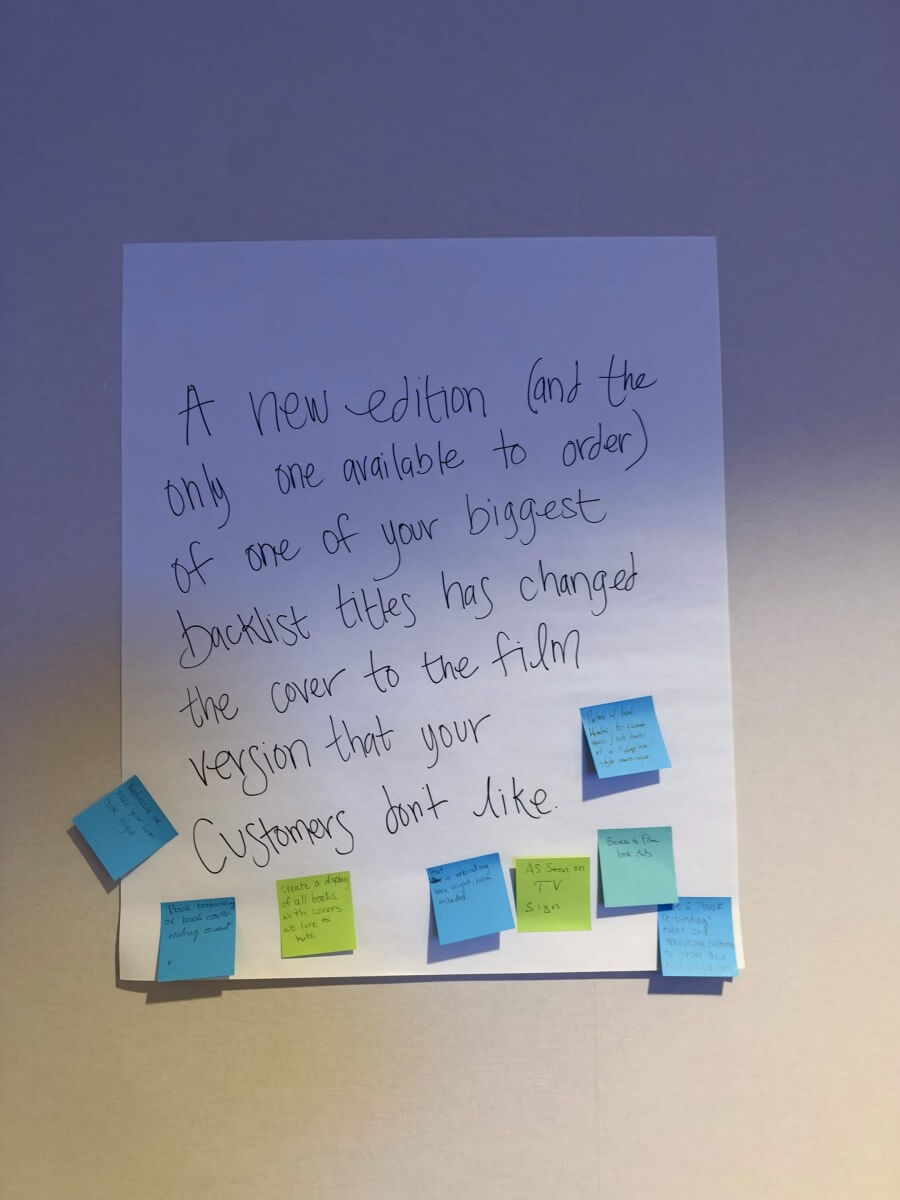
The booksellers tackled this problem from two perspectives. First, for those who would want the book already but not the cover, they suggested offering alternatives such as book re-binding or decorating. The other perspective was to attract new audiences such as those who are fans of the movie and encourage them to read the book as the new cover will likely be engaging to them.
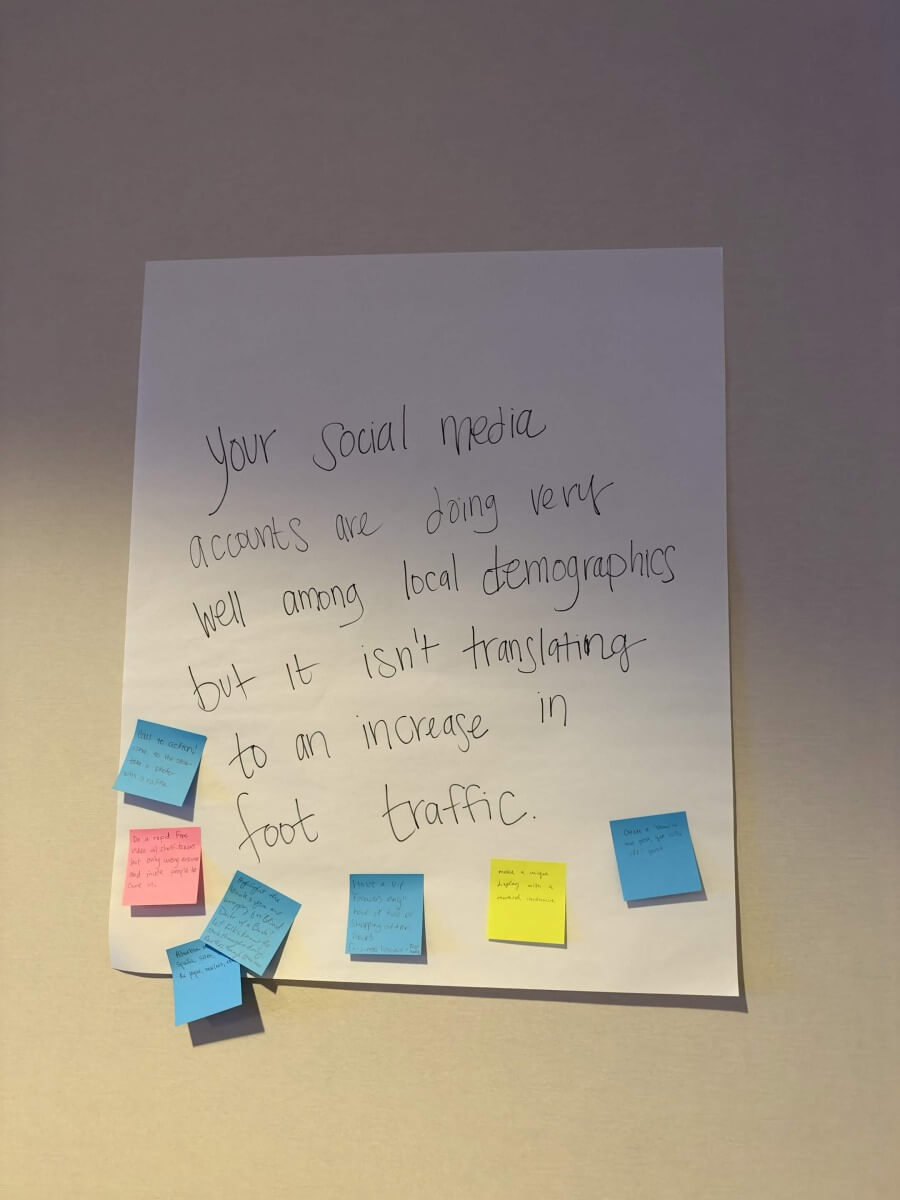
Many of the solutions here involved adding more incentive/call to action to your social media content. This could include creating special offers for those seeing your content or explicitly asking the new audience to vist in-store to show deeper support.
The booksellers had a lot of fun trying to come up with ways to appeal to this specific crowd. The most common idea was to increase the availability of impulse purchases (candy, gift items, picture books). Additionally, creating displays related to drinks such as book/drink pairings or books with drinks on the covers was suggested. A community-oriented idea was to partner with the bar for promotions.
The discussion here included suggestions to empower your booksellers to have more of a voice in the store's stock as the value of enthusiastic handselling could be more valuable than generally meeting the passive interests of your community. Additionally, booksellers suggested collaboration to create book comparisons to give staff better ability to recommend outside their preferred genre.